Islip sits in a humid subtropical zone where sudden summer downpours and nor’easters push water into basements and crawl spaces faster than older split-level and ranch homes can handle. Many houses built before 1980 in East Islip and Islip Terrace have slab-on-grade foundations with limited perimeter drainage, so standing water quickly saturates subfloor insulation and reaches Islip MacArthur Airport flight-path neighborhoods within hours. Technicians must account for the shallow water table common near Central Islip and the clay soils that prevent quick percolation, requiring high-volume pumps and immediate containment to avoid migration into adjoining rooms.
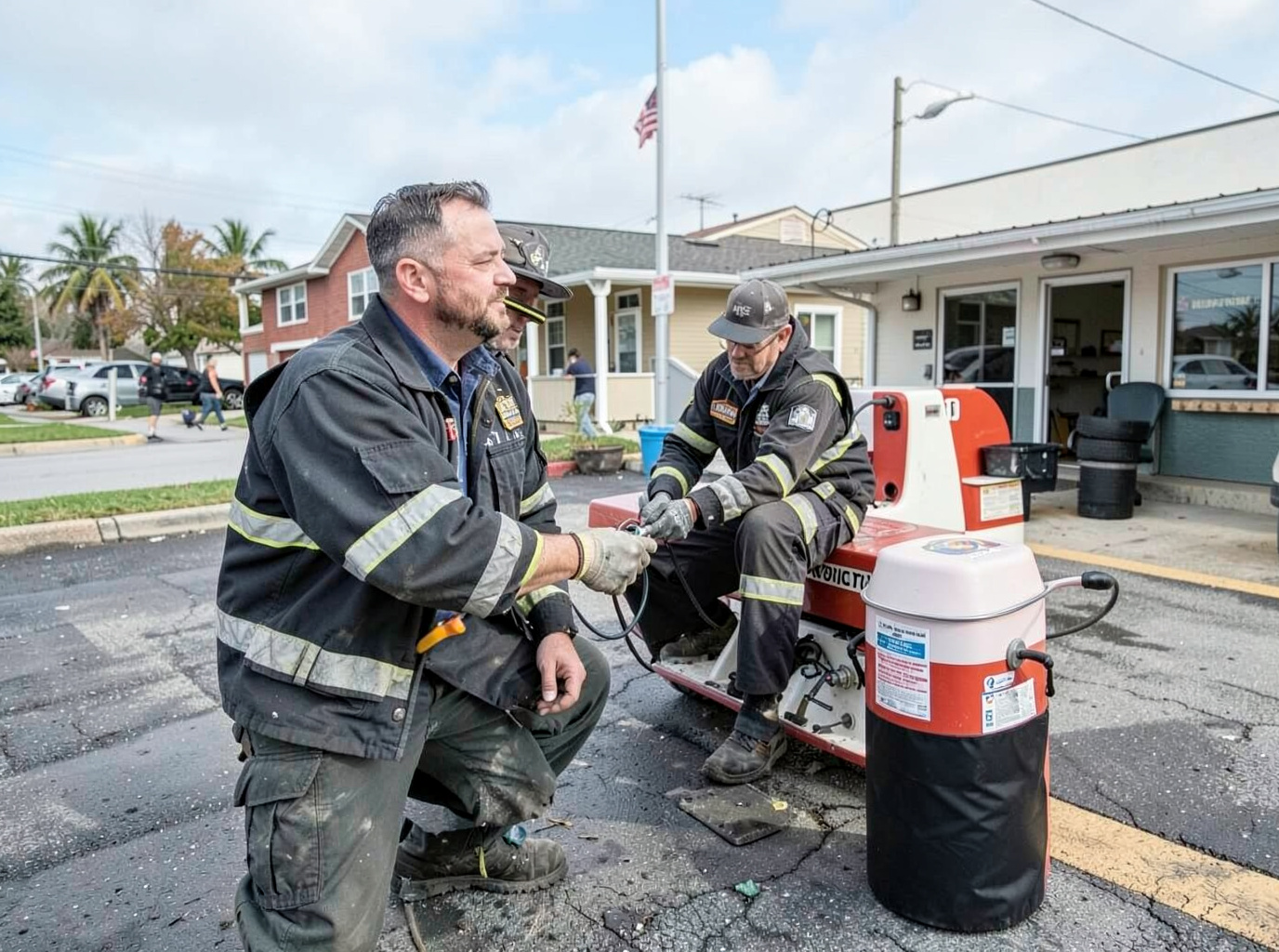
Extraction crews working out of the 7 Church Dr location respond to appliance failures, roof leaks around Islip Town Hall area, and sewage backups after heavy rain. They stage equipment to remove Category 1 through Category 3 water while protecting hardwood floors and electrical systems typical in Suffolk County stock. Edge cases include hidden pockets behind kitchen islands or under built-in cabinetry in 1960s ranches; missing these pockets leads to mold within days because of the region’s consistent humidity. Crews also coordinate with local power shutoffs near Ronkonkoma and Bay Shore when water reaches outlets.
After pumping, moisture mapping with thermal imaging identifies saturation in wall cavities and under tile common in Central Islip homes. Technicians document affected square footage and material types for insurance adjusters while keeping extraction hoses clear of driveways shared with neighbors in tight Islip Terrace lots. All removed water is disposed according to Suffolk County wastewater guidelines, and equipment is staged to avoid blocking access roads near the airport corridor.
Technician insight
In Islip the thing that catches most people out with Emergency Water Removal is how quickly water moves under the slab in pre-1970 homes once the clay soil in East Islip and Islip Terrace gets saturated after a summer storm. Homeowners often stop at visible puddles and miss the moisture that travels toward the foundation wall shared with the neighbor’s lot.
East Islip Basement After Heavy Rain
Water entered a 1968 ranch through a window well during a July storm and pooled across the finished basement. Extraction crews found saturation extending under the adjacent hallway tile and into the utility closet. High-volume pumps cleared the standing water while moisture mapping guided drying equipment placement, preventing further damage to subfloor insulation.
Emergency Water Removal Services We Offer
✓Basement Flood Extraction
High-volume pumping and containment for standing water in Islip and East Islip basements after storms or pipe bursts.
✓Appliance Leak Water Removal
Targeted extraction around failed water heaters, washing machines, and dishwashers common in Central Islip ranch homes.
✓Storm and Rainwater Extraction
Rapid removal of rainwater that enters through roofs, windows, or foundations during Suffolk County summer storms.
✓Crawl Space Water Removal
Pumping and drying of shallow crawl spaces typical under older Islip Terrace and Bay Shore properties.
✓Sewage Backup Extraction
Safe removal and disposal of contaminated water from backups affecting homes near Ronkonkoma and Central Islip.
Emergency Water Removal Cost in Islip, NY
| Service | Typical Range | What Affects It |
|---|---|---|
| Small Area Extraction (under 200 sq ft) | $350–$650 | Shallow clean water; increases with sewage or debris. |
| Basement Extraction (500–1,000 sq ft) | $800–$1,800 | Depth, access, and power availability affect final cost. |
| Crawl Space Water Removal | $500–$1,200 | Tight access and soil conditions in older Islip homes raise price. |
| Appliance Leak Extraction | $250–$500 | Limited to kitchen or laundry room; additional rooms add cost. |
Ranges are typical for Islip, NY and confirmed with an exact written quote before any work starts.
How it works
- 1
Site Assessment And Safety Check
Technicians inspect water source, depth, and electrical hazards at the Islip property before equipment enters.
- 2
High-Volume Extraction
Pumps and vacuums remove bulk water while containing runoff to prevent spread into unaffected rooms.
- 3
Moisture Mapping
Infrared scans locate hidden saturation in walls, floors, and subflooring throughout the affected area.
- 4
Initial Drying Setup
Air movers and dehumidifiers begin the drying process before full restoration crews arrive.
Pricing
Cost depends on water volume, affected square footage, and whether the water is clean or contaminated.