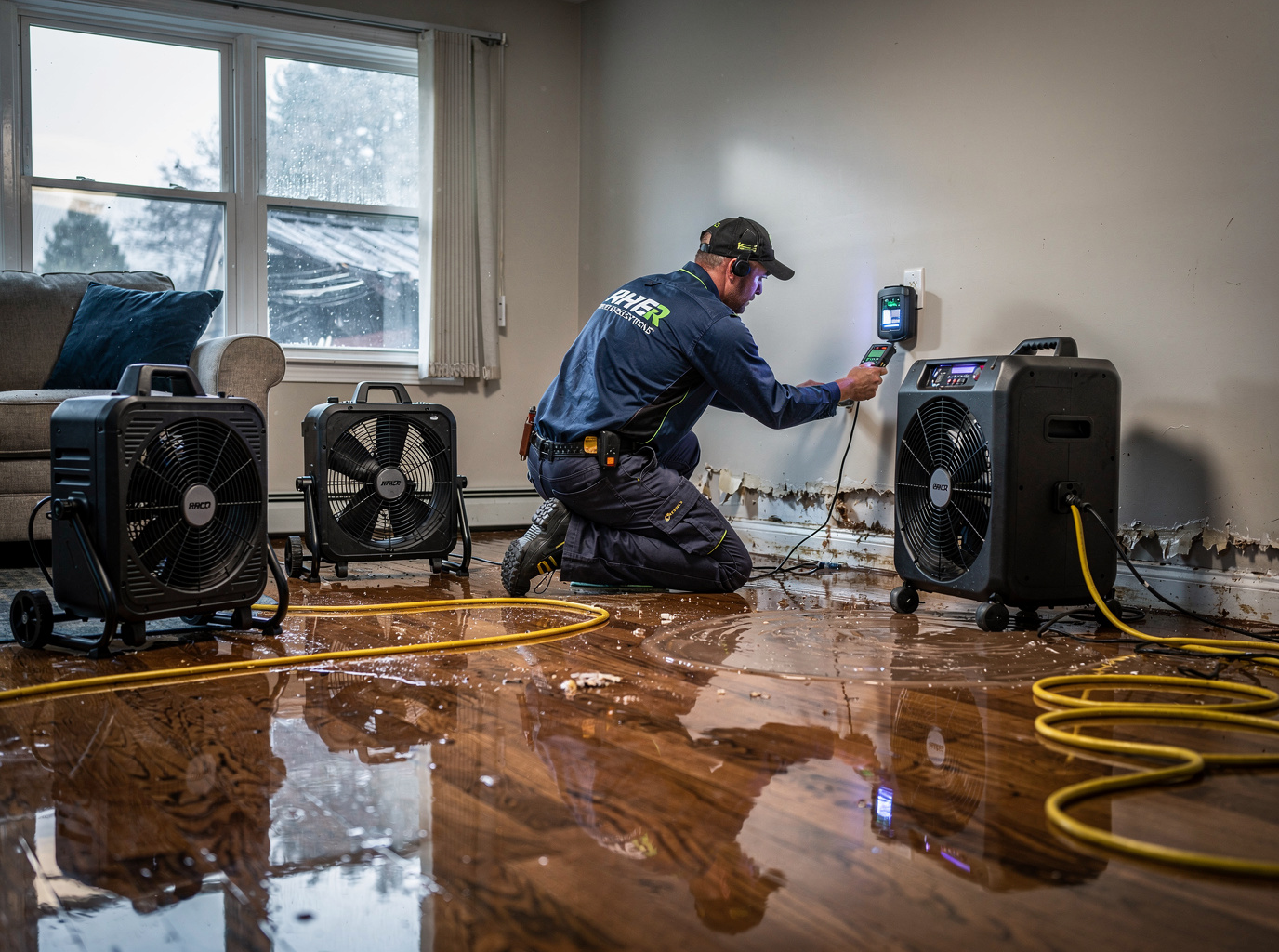
Islip’s humid subtropical climate brings hot, humid summers that accelerate mold growth once water enters older homes common in Islip Terrace and East Islip. Many properties built before 1980 still have cast-iron drains and galvanized supply lines that corrode and leak behind walls or under slabs. When a pipe bursts or storm water backs up, crews must pull baseboards, cut drywall at the moisture line, and run commercial dehumidifiers for days to drop humidity below 50 percent before any reconstruction begins.
Suffolk County building codes require permits for structural drying when more than 25 percent of a room is affected, and inspectors check that all hidden cavities reach dry standards. Homes near Central Islip and Ronkonkoma often sit on clay-heavy soil that holds water against foundations, so exterior grading and French drains frequently become part of the restoration scope. Technicians use moisture meters and thermal imaging to map saturation that extends into subfloors and insulation, preventing callbacks months later when summer humidity spikes.
Bay Shore and Central Islip basements flood most often after nor’easters push water through window wells and sump pits. In these cases, crews first isolate electrical circuits, then extract standing water with truck-mounted pumps before placing air movers in a directed pattern that forces moist air out through open windows rather than recirculating it. This sequence keeps secondary damage from warping hardwood floors or delaminating engineered cabinets common in 1970s–1990s stock.
Emergency calls on weekends are routed through the Central Islip shop at 7 Church Dr so technicians can reach Islip MacArthur Airport-area homes within the hour. Work stops only after every affected material tests dry on two consecutive readings, satisfying both homeowners and any insurance adjusters who visit the site.
Technician insight
In Islip the thing that catches most people out with Emergency Water Damage Restoration is how quickly humidity from a small ceiling leak travels through the plaster-and-lath in 1960s homes in Islip Terrace; once it hits the attic insulation you end up drying twice the square footage you first expected.
East Islip Pipe Burst After Freeze
A supply line split in an East Islip ranch during a January cold snap. Water traveled under the slab into two bedrooms. Crews isolated the line, extracted water from under the floor, opened baseboards, and ran drying equipment for four days until slab and framing tested dry. Homeowners moved back in without mold issues the following summer.
Emergency Water Damage Restoration Services We Offer
✓Basement Flood Extraction
Remove standing water from Islip basements using truck-mounted pumps and moisture mapping to protect foundations in clay-heavy Suffolk soil.
✓Ceiling and Wall Cavity Drying
Cut and dry saturated drywall and insulation behind walls after pipe leaks common in pre-1980 homes in East Islip and Islip Terrace.
✓Hardwood Floor Water Removal
Lift and dry cupped hardwood floors without full replacement by directing airflow under boards in humid summer conditions.
✓Sump Pump Failure Response
Clear backed-up sump pits and restore drainage after power outages during storms affecting Central Islip and Ronkonkoma neighborhoods.
✓Appliance Leak Containment
Contain and extract water from washing machine or water heater failures before humidity spreads mold in older Central Islip housing.
Emergency Water Damage Restoration Cost in Islip, NY
| Service | Typical Range | What Affects It |
|---|---|---|
| Initial Emergency Extraction Visit | $350–$650 | Varies with number of pumps needed and travel from Central Islip base |
| Full Drying Package (3–5 days) | $1,200–$2,800 | Includes equipment, daily checks, and final readings; larger homes or multiple rooms increase cost |
| Hidden Cavity Opening And Drying | $400–$900 | Per room when walls or ceilings must be opened in older Islip construction |
| Hardwood Floor Drying Only | $600–$1,400 | When subfloor is accessible without full board removal |
Ranges are typical for Islip, NY and confirmed with an exact written quote before any work starts.
How it works
- 1
Arrival And Safety Shutoff
Technician arrives, locates the water source, and shuts off valves or power to prevent further damage in the Islip home.
- 2
Water Extraction
Standing water is pumped out using portable and truck-mounted equipment suited to basement or slab-on-grade layouts common locally.
- 3
Moisture Mapping
Thermal cameras and meters identify hidden saturation in walls, floors, and insulation throughout affected rooms.
- 4
Drying And Monitoring
Air movers and dehumidifiers run until readings confirm materials are dry; daily checks prevent mold in humid Suffolk summers.
- 5
Final Documentation
Photos and moisture logs are provided for insurance and to confirm the property meets dry standards before rebuild.
Pricing
Pricing depends on water volume, affected square footage, and how many hidden cavities require opening; most jobs fall into standard ranges listed below.